

Over the past 15 years, The Skills Initiative has worked alongside employers to build training programs aligned with real workforce demand, connecting thousands of Philadelphians to career opportunities while helping companies address persistent talent shortages. As these employer-driven models have grown, we’ve heard a recurring question from partners and funders alike: how do you scale this work to create broader, lasting industry impact?
In Southeastern Pennsylvania, the answer is taking shape through a renewed focus on industry partnerships.
Industry partnerships represent the next evolution of The Skills Initiative’s workforce strategy. Our legacy model is designed to work with a single employer at a time to build a cohort to fill a single role type. While this is an incredibly impactful model for our training programs, it limits scale and our ability to support entire sectors.
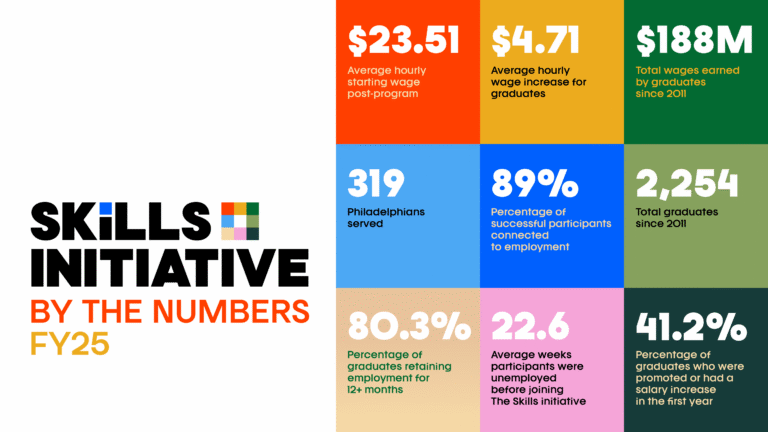
The collaborations we are building now bring experts, leaders, and decision-makers from key regional industries together to identify shared workforce challenges and coordinate solutions at scale. By convening employers alongside educators, workforce providers, public agencies, and community organizations, industry partnerships can create the infrastructure needed to build stronger talent pipelines, more responsive workforce systems, and strong collaborations.
This approach is particularly important in two sectors that are shaping the future of the Southeastern Pennsylvania region: healthcare and life sciences.
Healthcare has long served as the greater Philadelphia region’s largest and most essential employment sector, supporting workers and communities across Philadelphia and the surrounding counties. At the same time, the life sciences industry has continued its emergence as one of the region’s most important industries, with the potential to create significant economic opportunity in the years ahead. While these industries are distinct, they share many workforce challenges, from talent shortages and changing skill demands to the need for more equitable pathways into quality careers.
Through initiatives like our Keystone LifeSci Collaborative and the new Healthcare Workforce Collaborative, employers and partners are working together to better understand talent needs both now and in the future, strengthen training pathways, and develop coordinated responses that support both industry growth and economic mobility. This isn’t just talk—we are getting industry leaders into the same room to discuss real solutions to real problems.
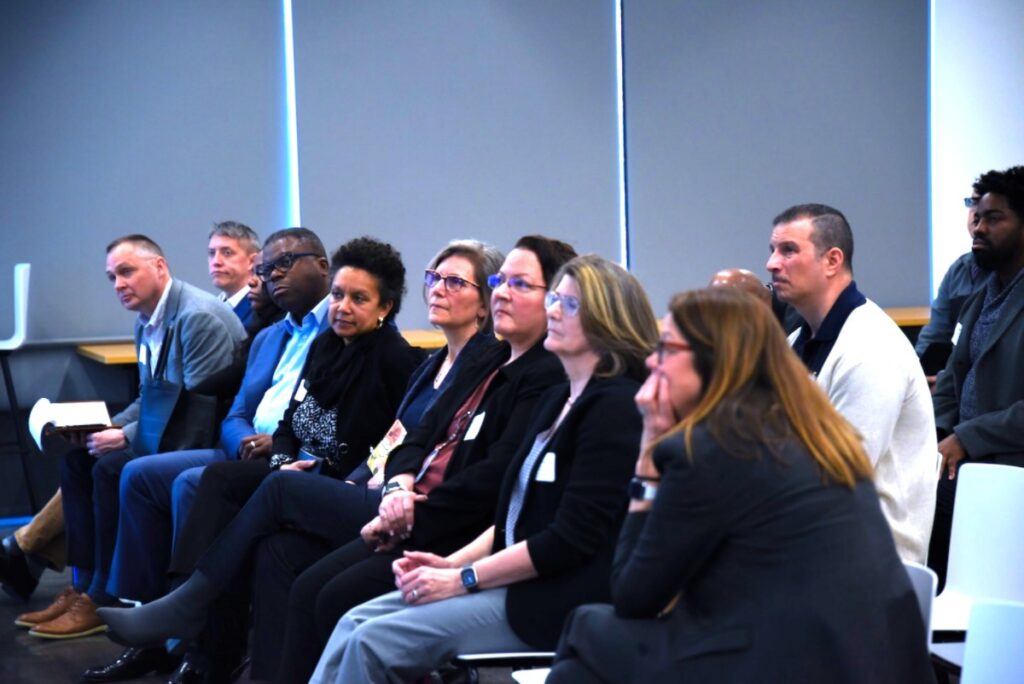
At The Skills Initiative, we believe our expansion into industry partnerships is not only a smart strategic evolution for our organization, but also the right thing to do for the two stakeholder groups at the center of our work: job seekers and employers. By leveraging our deep experience in direct workforce service delivery and the strong employer relationships we have built over the last 15 years, we are able to scale our impact in ways that strengthen entire talent ecosystems, not just individual programs.
For job seekers, industry partnerships create clearer, more directly aligned pathways into quality careers. When employers collectively help shape training priorities and define evolving workforce needs, participants benefit from programs that are more responsive, more relevant, and ultimately more likely to lead to long-term success. For employers, these partnerships create a trusted shared learning space; one where organizations can identify common workforce challenges, strengthen the practices already working well, and coordinate around talent priorities in ways that no single employer can accomplish alone. The collective learning and alignment make industries stronger, more resilient, and better organized.
Importantly, this work is not a departure from The Skills Initiative’s mission. Rather, it is a direct response to scale. The same employer-centered philosophy that has guided the organization’s training programs for more than a decade is now being applied at the industry level to help create sustainable, long-term workforce solutions for the region.
As these partnerships continue to evolve, The Skills Initiative will continue sharing updates, milestones, and lessons learned from this growing body of work that will always remain grounded in tangible action, measurable collaboration, and real outcomes for employers and workers alike.